Google Ads API adds benchmarks and more PMax controls
Google Ads API v25.2 adds competitive benchmarks, PMax controls and easier creator discovery for programmatic media teams.


Google Ads is giving API users more competitive data and campaign controls in version 25.2, including new benchmarking metrics, Performance Max management options and creator-search improvements.
The release is a minor API update with no breaking changes, but it adds several capabilities that matter to agencies and advertisers running campaign operations through internal tools rather than relying only on the Google Ads interface.
Key Takeaways
- Google Ads API v25.2 adds percentile-based competitive benchmarks through BenchmarksService.
- Performance Max gains new migration, URL-management and reporting controls.
- Creator workflows can search YouTube creators by channel handle instead of requiring channel IDs.
Table of contents
Jump to each section:
- Competitive benchmarks move into programmatic workflows
- PMax gets more controls for migration and tracking
- Creator discovery becomes easier to automate
- Paid-media control increasingly means supervising automation
Competitive benchmarks move into programmatic workflows
The most useful reporting addition is competitive benchmarking through Google's BenchmarksService. The service exposes percentile-based benchmark metrics that developers can bring into their own reporting and optimization systems.
That matters for teams managing large account portfolios. Competitive context is more useful when it can sit beside spend, conversion and campaign data inside the same internal dashboard, rather than being checked manually in a separate workflow.
The update does not make competitive data a substitute for campaign economics. A benchmark can show how an account compares with peers, but teams still need to judge whether closing that gap would improve profitable outcomes.
PMax gets more controls for migration and tracking
Google is also making it easier to move advertisers from Smart campaigns into Performance Max. A new API method can generate a PMax draft from an existing Smart campaign, giving agencies and software providers a programmatic path for campaign upgrades.
Performance Max asset groups also gain tracking templates, custom URL parameters and final URL suffix controls. Those fields make it easier for teams to preserve measurement conventions when campaign structures are created or updated automatically.
The release adds two PMax-specific reporting segments: whether an ad uses Merchant Center product data and whether it uses a video asset. Google is also adding new asset-automation options for image enhancement and image extraction from final URLs.
Those are small controls individually, but together they make automated campaign management easier to inspect and standardize across accounts.
Creator discovery becomes easier to automate
Google's Content Creator Insights service can now search for creators using YouTube channel handles instead of requiring channel IDs.
For campaign-management platforms, that removes a small but real data-cleaning step. Channel handles are easier for marketers to recognize and collect, while channel IDs are better suited to machine-readable systems.
Making handles queryable means creator discovery can fit more naturally into software that connects campaign planning, creator selection and paid amplification.
This is still an API-level improvement rather than a new creator marketplace. The value is operational: teams can build simpler internal or third-party workflows around information marketers already use.
Paid-media control increasingly means supervising automation
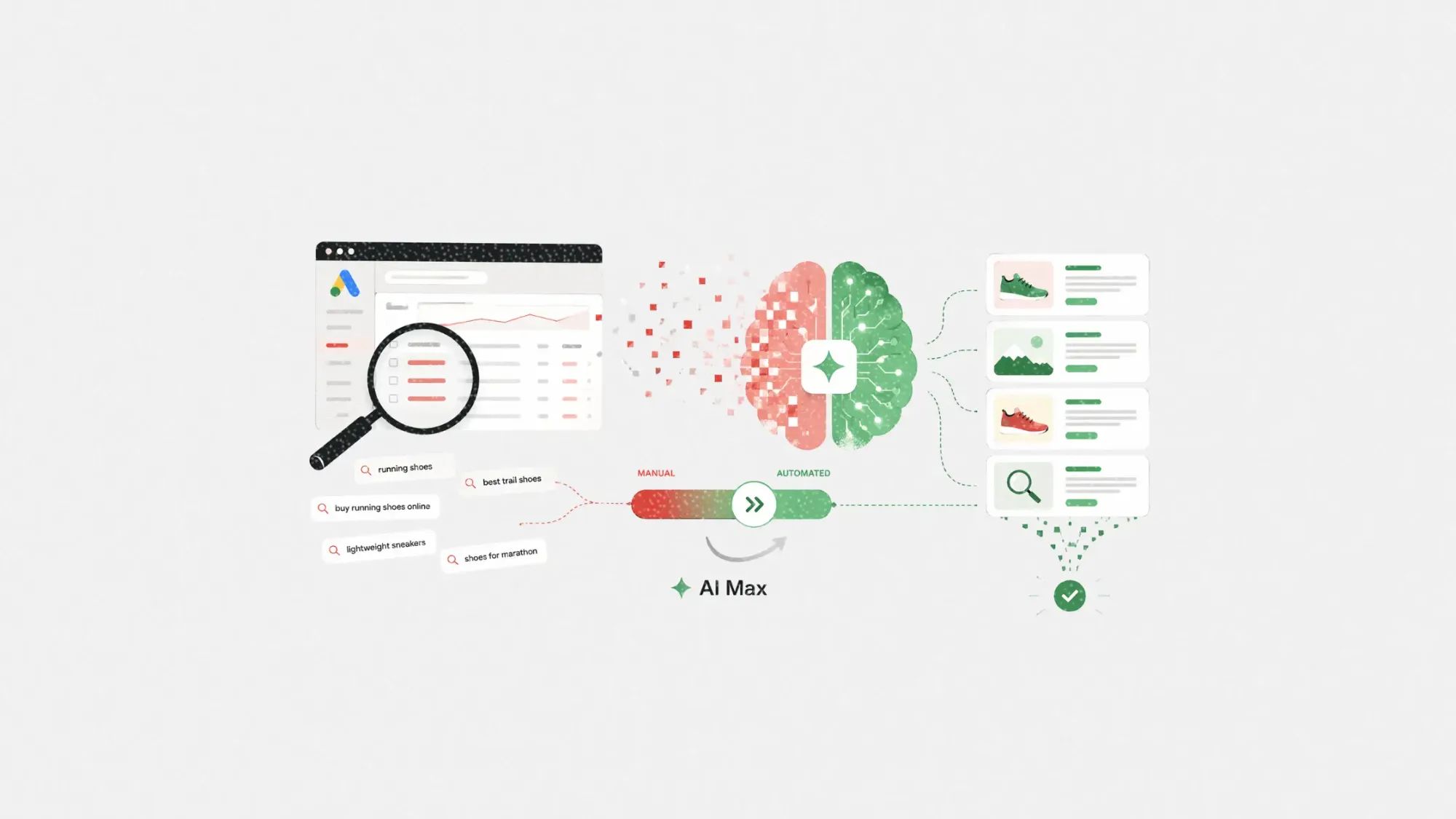
The pattern across Google Ads is becoming familiar. The platform continues to automate campaign creation, asset use and bidding, while APIs expose more controls and reporting fields around those automated systems.
That changes what "control" means for technical media teams. It is less about manually changing every campaign element and more about deciding which rules should be encoded, what data should be surfaced and which exceptions require human review.
Version 25.2 fits that direction. Competitive benchmarks provide context. PMax migration and URL controls help standardize execution. Creator-handle search makes another workflow easier to automate.
For agencies and advertisers with mature media operations, the practical value is not the version number itself. It is the ability to bring more of Google's automated campaign machinery into systems that teams can monitor, audit and govern.